Few things capture the elegance and indulgence of French pâtisserie quite like French puff pastry desserts. With their golden, shatteringly crisp layers and buttery richness, these treats have delighted palates for centuries, embodying the precision and artistry that define French cuisine.
Puff pastry, known in France as pâte feuilletée, transforms simple ingredients—flour, butter, water, and salt—into something extraordinary through a laborious lamination process. The result is hundreds of delicate, airy sheets that rise dramatically in the oven. Whether enjoyed in a chic Parisian patisserie or recreated in a home kitchen, French puff pastry desserts offer a perfect balance of texture and flavour that continues to captivate both novices and connoisseurs alike.
In this exploration of French puff pastry desserts, we delve into their fascinating origins, signature creations, and enduring appeal. From festive galettes to elegant mille-feuilles, these desserts showcase why puff pastry remains a cornerstone of French baking tradition.
The Origins and Craft of Puff Pastry
The precise birthplace of puff pastry is somewhat debated among food historians. While some legends attribute its invention to a 17th-century French pastry apprentice named Claudius Gelée, earlier references suggest roots stretching back to medieval times, with similar laminated doughs appearing in Spanish-Arabic cookbooks from the 13th century and even ancient Greek preparations.
What is certain is that the French perfected the technique. Pâte feuilletée involves repeatedly folding and rolling a dough envelope around a block of butter—known as the détrempe and beurrage—to create dozens or even hundreds of alternating layers. This meticulous process demands patience, a cool environment, and attention to detail to prevent the butter from melting or the layers from merging.
In French kitchens, this versatile dough serves as the foundation for both sweet and savoury delights. For desserts, it provides the ideal canvas: neutral enough to highlight fillings yet dramatic enough to impress.
Iconic French Puff Pastry Desserts
Mille-Feuille: The Thousand-Layer Classic
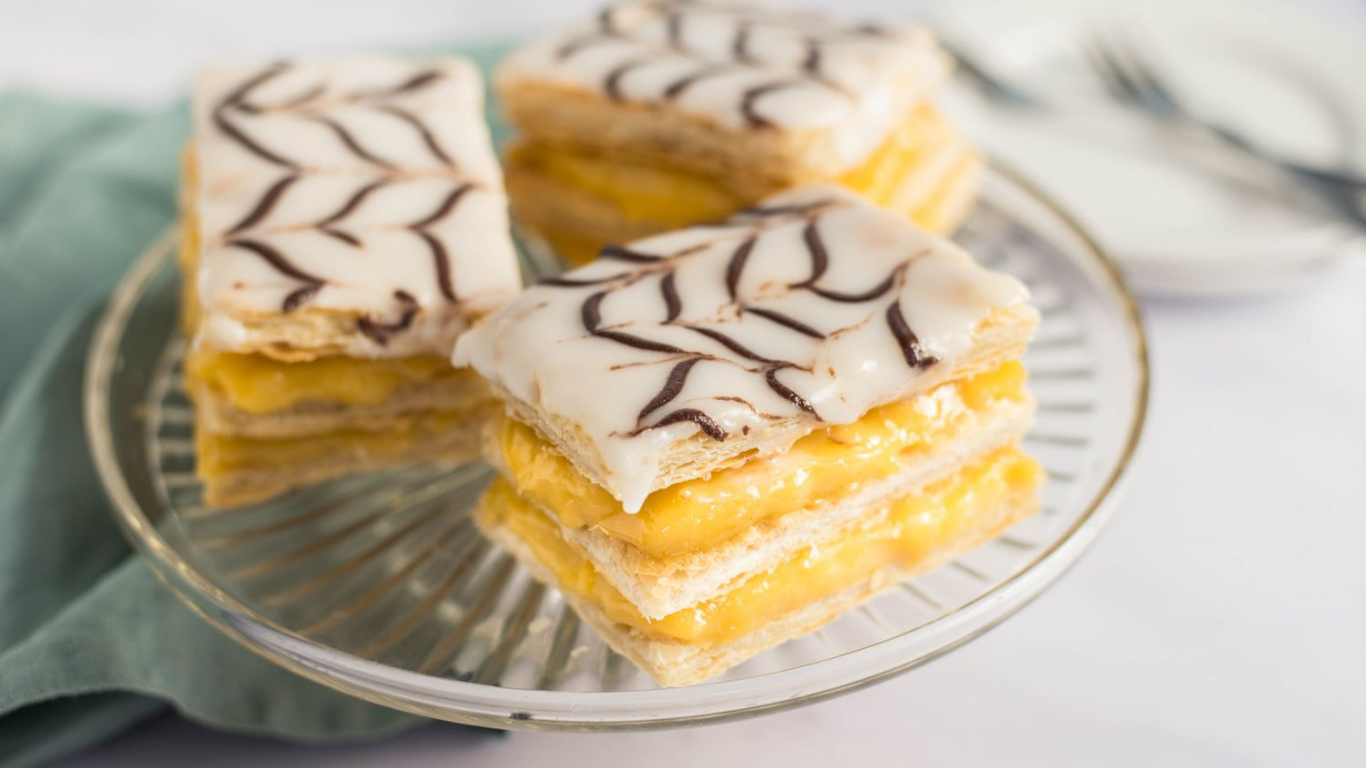
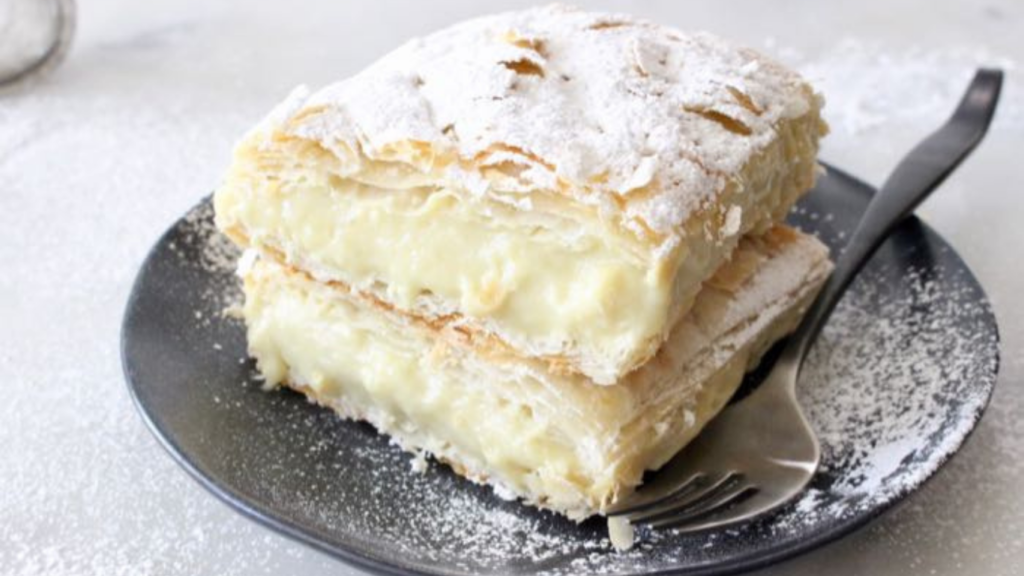
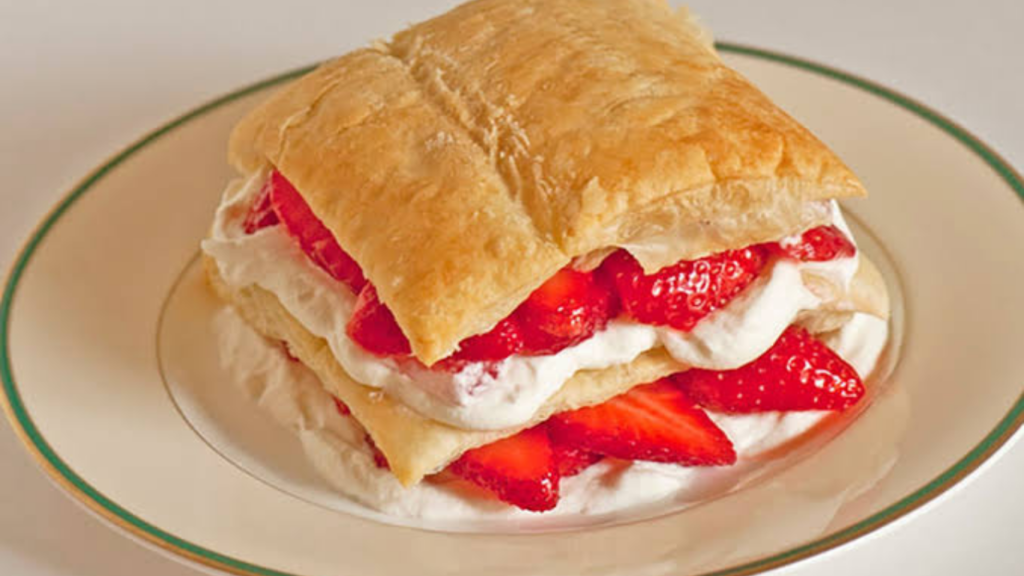
No discussion of French puff pastry desserts would be complete without the mille-feuille, often called a Napoleon in some regions. Its name translates to “a thousand leaves,” referring to the multitude of flaky layers. Traditionally, it features three sheets of baked puff pastry alternating with two layers of smooth vanilla pastry cream (crème pâtissière), finished with a dusting of icing sugar or an elegant marbled fondant top.
The first known recipe appeared in François Pierre de La Varenne’s 1651 cookbook Le Cuisinier François. Modern variations might incorporate fresh berries, chocolate, or seasonal fruits, but the classic remains a testament to restraint and balance. Cutting through a well-made mille-feuille reveals the satisfying contrast between crisp pastry and silky cream—a sensory experience that explains its timeless popularity.
Galette des Rois: A Festive Tradition
Each January, French households celebrate Epiphany with the galette des rois. This round puff pastry pie, filled with fragrant almond frangipane, hides a small ceramic figurine (fève) inside. The person who finds it in their slice becomes king or queen for the day and wears a paper crown.
Its golden, scored top and buttery layers make it a highlight of winter gatherings. Bakers across France compete to create the most beautiful versions, some incorporating chocolate, pistachio, or fruit fillings alongside the traditional almond.
Palmiers and Other Delights
Palmiers—heart-shaped, caramelised puff pastry biscuits—offer a simpler pleasure. Rolled in sugar and baked until deeply golden and crisp, they resemble palm leaves, hence the name. Their ease of preparation makes them a favourite for home bakers using ready-made puff pastry.
Other notable French puff pastry desserts include the jésuite, a triangular pastry filled with frangipane and topped with almonds, and various fruit turnovers or chaussons. Even the humble apple turnover (chausson aux pommes) elevates basic ingredients into something special when encased in flaky layers.
Mastering Puff Pastry at Home
While professional French puff pastry desserts rely on handmade pâte feuilletée, home cooks can achieve excellent results with quality shop-bought versions or by attempting a rough puff method, which requires fewer turns and less resting time while still delivering impressive flakiness.
Key tips include keeping everything cold, working quickly, and allowing adequate chilling between folds. For best results, use high-quality unsalted butter with a high fat content. When baking, a hot oven encourages the dramatic rise that characterises these desserts.
Cultural Significance and Modern Twists
French puff pastry desserts extend beyond mere indulgence; they form part of the country’s rich culinary heritage protected by traditions like the appellation systems for certain regional specialities. They appear at celebrations, Sunday lunches, and elegant soirées alike.
Contemporary pastry chefs continue to innovate while honouring classics. Expect flavour combinations like matcha and yuzu in a mille-feuille or lavender-infused frangipane in a galette. Yet the fundamental appeal of perfectly executed puff pastry endures: that irresistible contrast of textures and the way it melts in the mouth.
Quick Facts on French Puff Pastry Desserts
| Detail | Information |
| Key Ingredient | Pâte feuilletée (puff pastry) |
| Signature Technique | Lamination |
| Iconic Examples | Mille-feuille, Galette des Rois, Palmiers |
| Origin Era | Perfected in France, roots in earlier European traditions |
| Best Enjoyed | Fresh, on the day of baking |
Legacy and Lasting Impact
French puff pastry desserts represent more than recipes—they symbolise a philosophy of craftsmanship, seasonality, and joy in simple pleasures elevated through skill. Their influence extends worldwide, inspiring bakers from amateur enthusiasts to Michelin-starred chefs. In an era of quick fixes and mass production, these layered creations remind us of the value of time-honoured techniques and the pleasure found in quality ingredients.
They have shaped global perceptions of French cuisine as synonymous with luxury and refinement, while remaining accessible enough to enjoy in everyday settings.
Conclusion
From the intricate layers of a mille-feuille to the festive charm of a galette des rois, French puff pastry desserts continue to enchant with their delicate balance of crispness and tenderness. They invite us to slow down, savour the moment, and appreciate the quiet artistry behind every bite.